


Monitoring Food Affordability in Renfrew County and District, 2025 Report
Introduction
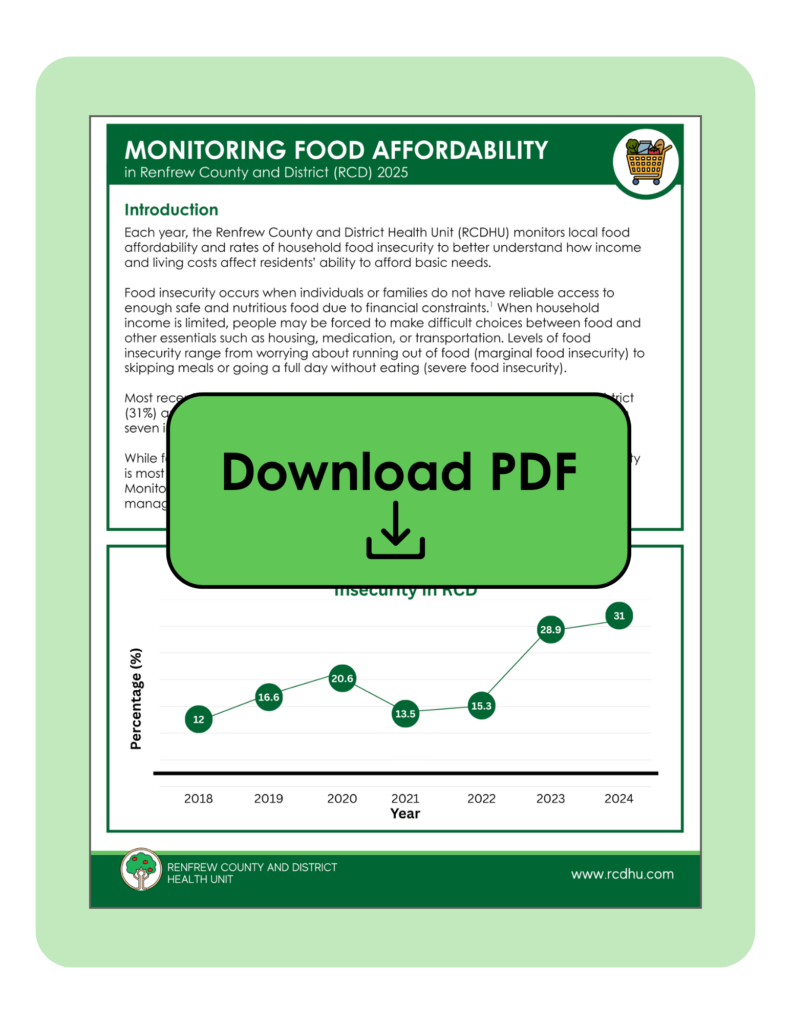
Each year, the Renfrew County and District Health Unit (RCDHU) monitors local food affordability and rates of household food insecurity to better understand how income and living costs affect residents’ ability to afford basic needs.
Food insecurity occurs when individuals or families do not have reliable access to enough safe and nutritious food due to financial constraints (1). When household income is limited, people may be forced to make difficult choices between food and other essentials such as housing, medication, or transportation. Levels of food insecurity range from worrying about running out of food (marginal food insecurity) to skipping meals or going a full day without eating (severe food insecurity).
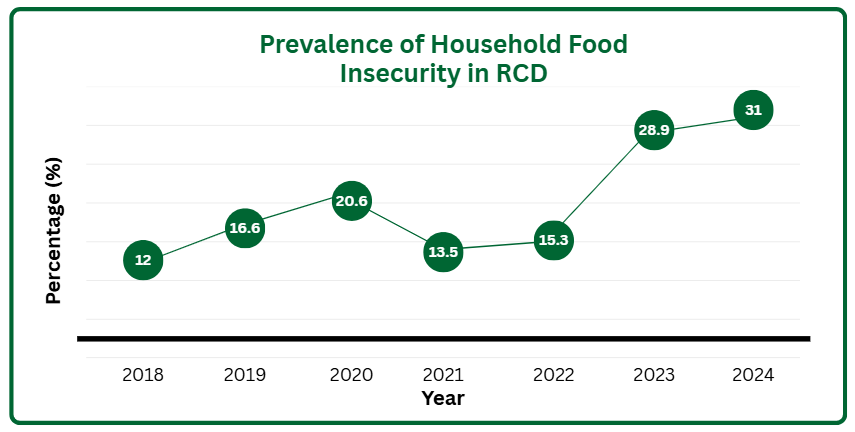
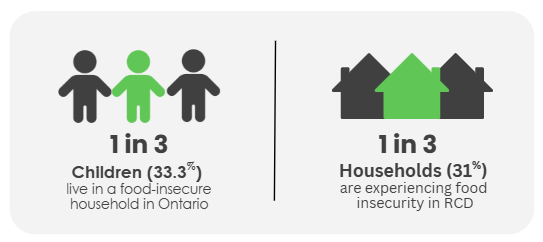
Most recently, approximately one in three households in Renfrew County and District (31%) are estimated to be food insecure, compared to one in six in 2022 and one in seven in 2021 (2).
While food prices can affect household budgets, evidence shows that food insecurity is most closely linked to inadequate income rather than the cost of food itself. Monitoring local food costs helps illustrate how far different income sources must be managed to cover essential needs.
Food Affordability Scenarios in Renfrew County and District
RCDHU monitors local food affordability using the Nutritious Food Basket (NFB) tool. The NFB is a list of 61 common food items that together represent a basic, nutritious diet based on Canada’s Food Guide.
Each year, RCDHU staff visit nine grocery stores across RCD to record the current prices of the food items in the NFB. These local food prices are combined with average rental rates, and income information from various sources, to create income scenarios. Housing rental rates were obtained from the 2021 Canadian Rental Housing Index (CRHI), adjusting for inflation. Findings suggest that the CRHI rental rates underestimate current market rates for all accommodation types by as much as 70%. RCDHU recommends using caution when evaluating the income scenarios.
The income scenarios estimate how much of a household’s monthly income is needed to pay for food and housing in different situations. Examples of income sources include employment income or receiving supports through Ontario Works (OW), Ontario Disability Support Program (ODSP), Old Age Security and Guaranteed Income Supplement (OAS/GIS), and/or Guaranteed Annual Income System (GAINS).
Results show that households with lower incomes have less money left over for other essential expenses once food and housing are paid for. Remaining income must cover needs such as utilities (if not included in the cost of rent), childcare, medications, phone and internet, transportation, and clothing. Ultimately, differences in income and living costs affect the affordability of food and other basic needs in RCD.
Households Without Children
| Monthly Income* | Estimated Monthly Rent** | Monthly Cost of Food | Remaining Income After Food and Rent | |
|---|---|---|---|---|
| Single Person, OW | $901 | $847*** | $435 | – $381 |
| Single Person, ODSP | $1,543 | $847*** | $435 | $261 |
| Single Person, OAS/GIS, GAINS | $2,129 | $847*** | $308 | $974 |
| Single Pregnant Person, ODSP | $1,583 | $847*** | $460 | $275 |
| Single Person, Minimum Wage | $2,287 | $847*** | $435 | $1,005 |
Households With Children
| Monthly Income* | Estimated Monthly Rent** | Monthly Cost of Food | Remaining Income After Food and Rent | |
|---|---|---|---|---|
| Family of Four, OW, 2 School-Age Children | $3,013 | $1,375 | $1,250 | $388 |
| Family of Four, Minimum Wage, 2 School-Age Children | $5,112 | $1,375 | $1,250 | $2,487 |
| Family of Four Median Income, 2 School-Age Children | $9,865 | $1,375 | $1,250 | $7,240 |
| Family of Three, OW, 2 School-Age Children | $2,776 | $1,375 | $932 | $469 |
| Family of Three, OW, 2 Preschool-Age Children | $2,973 | $1,263 | $731 | $979 |
| Family of Two, OW, Parent with Breastfed Infant | $2,101 | $1,263 | $460 | $378 |
*Includes benefits and credits (e.g., Ontario Trillium Benefit, Canada Child Benefit, Old Age Security, etc.)
**Based on CHRI 2021; adjusted for inflation. May or may not include utilities.
***In 2025, bachelor-style accommodations were assumed for all single-person scenarios.
Comparisons to previous years should be made with caution.
Food Insecurity is a Public Health Concern
People living in food insecure households experience higher rates of chronic disease and poorer overall health compared to those who are food secure. Food insecurity can make it harder to prevent or manage health conditions and is linked to greater use of health care services and an increased risk of premature mortality.
Food insecurity is an important indicator of material hardship and a key social determinant of health. It affects physical, mental, and social well-being across the lifespan.
In Canada, adults who are marginally food insecure have 26% higher odds of being admitted to hospital for acute care, while those who are severely food insecure have 69% higher odds of admission compared to adults who are food secure. Food insecurity is also associated with longer hospital stays and higher health care costs (3).
Health Impacts Associated with Food Insecurity
Individuals experiencing food insecurity are more likely to experience: (4)
- mental illness
- heart disease
- asthma
- diabetes
- poor oral health
Food insecurity can also contribute to chronic pain and poor mental health outcomes, including anxiety and stress. Difficulty affording adequate food may also lead to skipped medications, missed medical appointments, and challenges following recommended therapeutic diets. These factors can make managing chronic illness more difficult and further increase health care needs over time.
Who is Most at Risk?
Food insecurity can affect anyone, but it is more common in households with lower or unstable incomes.
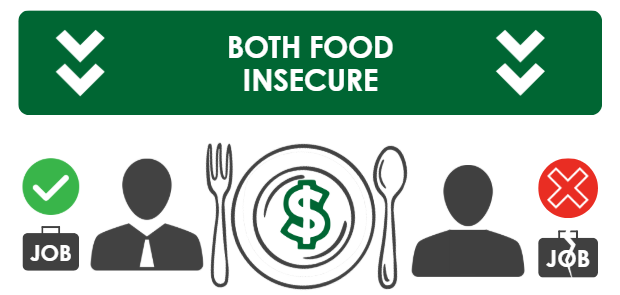
In Canada, about 70% of households receiving social assistance report experiencing food insecurity. However, having a job does not always prevent food insecurity. Nearly 60% of food insecure households report wages, salaries, or self-employment as their main source of income (5).
Recent Canadian research also found that among the food insecure households reliant on employment income, 89% had a main income earner working in a permanent, full-time position (6). These findings show that food insecurity can affect households across different employment situations.
Certain groups are more likely to experience food insecurity, including individuals who:
- Live in rental housing
- Are single female parents
- Are members of racialized groups
- Identify as Indigenous or non-white
These patterns highlight how differences in income, employment, and housing conditions can influence a household’s ability to afford food and other necessities.
Children and Food Insecurity
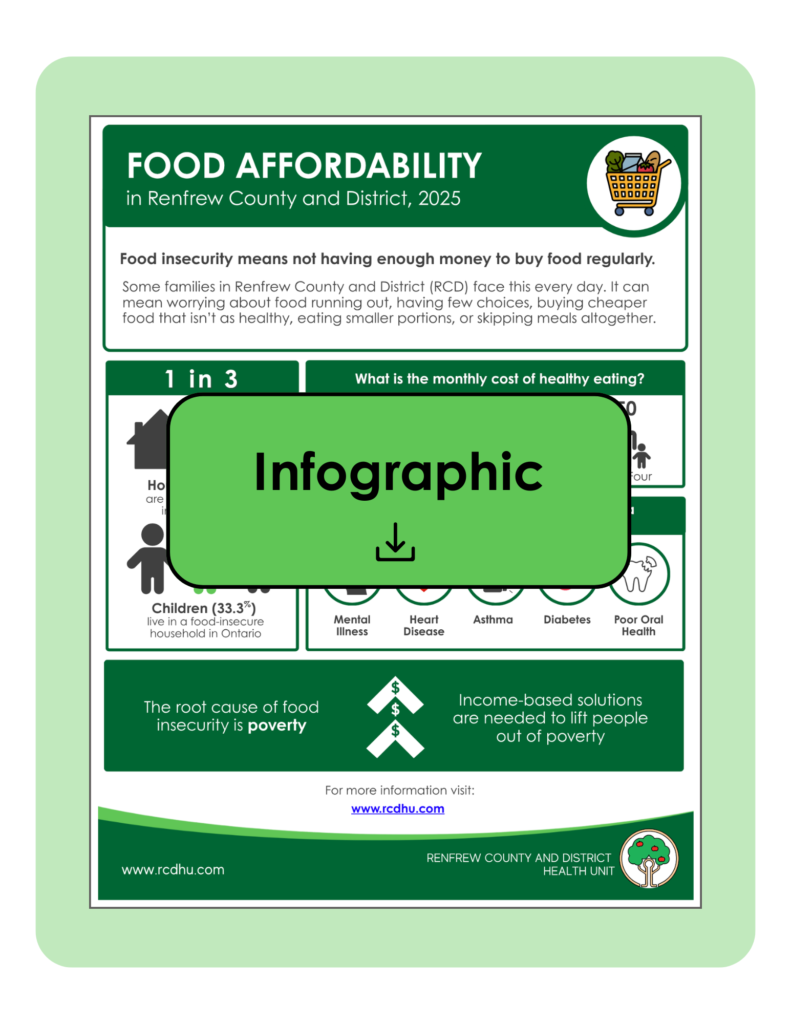
Children are especially vulnerable to the effects of food insecurity. In Ontario, one in three children (33.3%) under the age of 18 live in a household experiencing food insecurity. Food insecurity is more common in female lone-parent families, where more than half (52.1%) report being affected (6).
Growing up in a food insecure household can negatively affect a child’s physical and mental health. Research shows that children living with food insecurity are more likely to experience:
- asthma
- low self-esteem
- anxiety
- depression
They may also struggle to develop confidence in making positive lifestyle choices, such as eating well and being active. Over time, these challenges can interfere with academic achievement, social relationships, and overall well-being. The effects of food insecurity in childhood can persist into adulthood, increasing the risk of chronic disease and poor mental health later in life.
Food Insecurity is a Result of Poverty
Food insecurity occurs when household income is not enough to cover the cost of basic living expenses, including food. Addressing food insecurity therefore requires attention to income adequacy rather than food availability alone.
Research in Canada shows that policies which strengthen household income can reduce rates of food insecurity. Examples include:
- Public pension programs such as the Canada Pension Plan, Old Age Security, and the Guaranteed Income Supplement, which help keep many older adults out of poverty
- Increases to the Canada Child Benefit for families with low incomes
- Higher social assistance rates
- Income tax measures that reduce the financial burden on low-income households
Monitoring the impact of these and similar policies can help identify effective ways to improve income security and reduce the risk of food insecurity over time.